
If you live with ADHD, you’ve probably tried to “get organised” a million times before. You might have read books, bought storage products, watched decluttering programmes, or promised yourself that you’ll do better this time – you’ve finally found that perfect solution you’ve been looking for! And yet, despite your best intentions, clutter creeps back in, your systems fall apart, and your home becomes a mess again.
This isn’t because you lack willpower, discipline or care. It’s because your ADHD presents challenges with getting and staying organised, and you’ve not found the best way to deal with those challenges as yet.
ADHD affects how we plan, prioritise, initiate tasks, complete tasks, and keep the bigger picture in mind. It shapes how we interact with our environment, how we process visual information, and how we respond to overwhelm. When organising systems don’t take this into account, they’re unlikely to work.
The good news is that an organised home is possible with ADHD. But it requires an approach that’s rooted in self-understanding and commitment.
Below are some of the most common ADHD-related organisational pitfalls I see when working with clients, examples of how they manifest in everyday home life, and practical ways to work with them rather than against them.
1. Perfectionist/all-or-nothing thinking
“If I can’t do it properly, there’s no point starting”
How it shows up at home
Perfectionism in ADHD is extremely common. Sadly, it can lead to creating overly complex or ”perfect” systems that inevitably fail – leading you to feel like a failure as well.
You may feel that decluttering has to be done in one complete, ideal way. You imagine a full weekend, the perfect storage solutions, labelled containers, and a beautifully finished result.
But because real life rarely allows for this, nothing gets started at all – you keep putting it off and putting it off until some future date where it can finally be “done properly”. Or you begin, realise you can’t finish to the standard you’d imagined, and abandon the project halfway through—leaving more mess than before.
Perfectionism can also make decision-making harder. You may struggle to let go of items because you want to make the right choice, not just a good-enough one.
You may over-complicate storage systems or organising solutions because you hold yourself to a high standard that realistically is too much for you to keep up with.
How to work with it
The key shift is moving from perfect to good enough.
Give yourself permission to do things imperfectly. Doing it imperfectly but consistently is better than not doing it at all, or doing it “perfectly” for a short time and then quitting.
An organised home is built through small repeated actions. A half-organised drawer that functions is better than a perfect one that only exists in your head.
Practical strategies include:
- Allowing yourself to work on a very small area, rather than needing to complete a whole room at a time
- Allowing “good enough” solutions that can be refined later
- Simplifying those solutions as much as possible!
- Reminding yourself that organising is an ongoing practice, not a one-time event
- Committing to doing little and often
- Linking tidying to an existing routine, such as tidying your workspace as your laptop/computer boots up, or for five minutes before you go for lunch
If you’re struggling to get started because you’re waiting until you come up with the perfect solution, it might be helpful to remind yourself that trial and error creates more clarity. You don’t need complete clarity before you begin. And, although hard, try to forgive yourself for “not being able” to do it “perfectly”. There is no perfect way. It’s about what works for you.
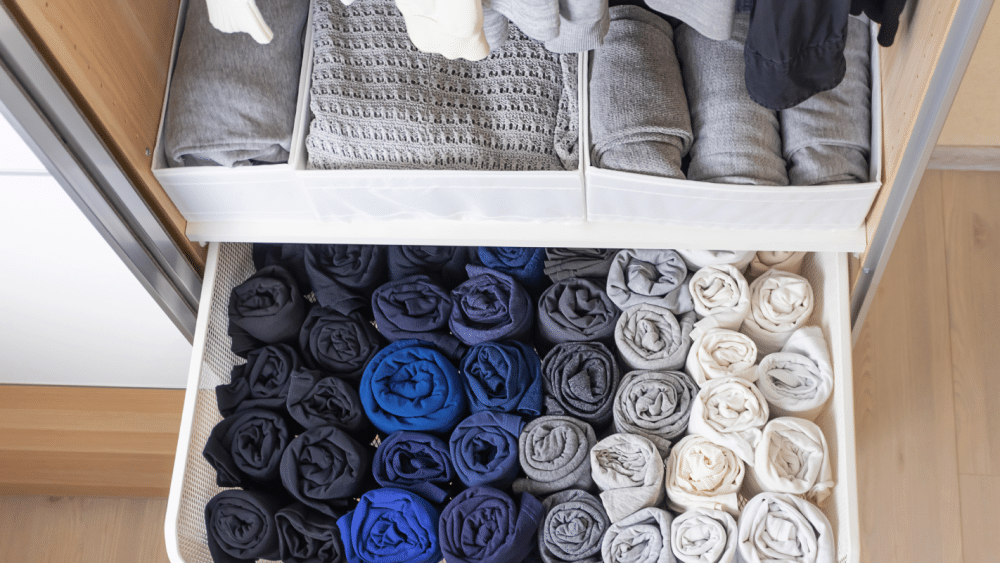
Example: You won’t put your underpants away until you’ve folded them all perfectly, but because it takes a long time to do, you put the task off. You end up living out of your laundry basket or your clothes get put in a pile somewhere and you dress from that pile rather than your wardrobe (I see this all the time with clients!).
Solution: Put your pants straight into a drawer unfolded and let that be enough for now. It’s better to have a tidy-looking room and have your underpants away in a drawer than it is to have piles of laundry cluttering up the space. You deserve to be able to use your wardrobe! Trust me, I don’t fold my own underwear and I’m a professional. If it’s too difficult for you to do straight away, make it easier.
2. Needing visual reminders
“If I can’t see it, I forget it exists”
How it shows up at home
Many people with ADHD rely heavily on visual cues. When items are put away in drawers or cupboards, they effectively disappear—leading to forgotten belongings.
Being out of sight means you forget to use them, and unused items are pointless, unless their purpose is purely decorative.
The problem is that keeping one thing out as a visual reminder works. But multiply that by all the items you have, and not only will you have a lot of surface/visual clutter, but keeping everything out will create a different kind of blindness, where there’s too much going on visually that everything gets blocked out anyway.
How to work with it
If keeping things out is important to you, consider:
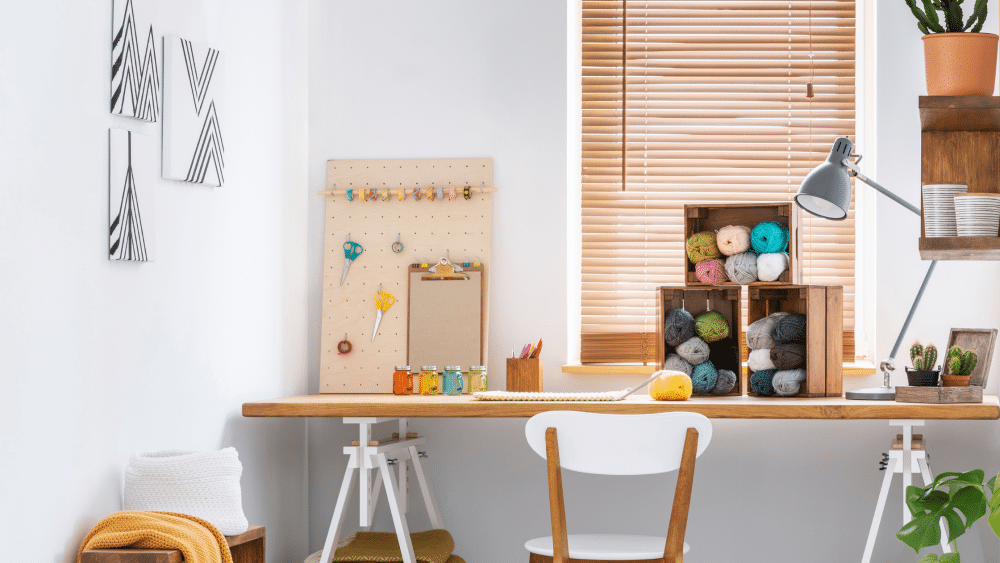
- Keeping items grouped in clear containers so they stay organised and tidy
- Taking doors off of cupboards so that you can see what’s in them
You might designate visible “homes” for things you use often, and closed storage for items you use rarely.
If you find you still struggle to find/use/remember things, consider reducing visual noise by limiting the amount you have out at once. Fewer items on display makes it easier for your brain to process what’s there.
Another issue surrounding this is that you might struggle to know what is important/essential to keep visible, and what is not. See point 4 for details on that.
Ultimately, your goal should be to make important things visible and accessible and not so important things tidy and out of the way. Some trust will be needed in your ability to remember the things you’ve put away and to cope when you forget, as we all do from time to time.
Example: You keep all your skincare products out in your bathroom so that you don’t forget to use them. This might work, but it looks messy, or it might make you feel so overwhelmed, you ignore the products and don’t use any.
Solution: Keep the few products out that you need to use daily, and store the rest away, by category if you’ve got a lot of stuff, in clear and labelled containers, so you are reminded when you open the cupboard that those extra beauty steps exist.
3. Difficulty seeing the bigger picture
“I get stuck in details and lose momentum”
How it shows up at home
You might start tidying the kitchen and find yourself reorganising a single drawer for an hour, or even just planning how to organise it, rather than doing it. The hour’s up, and you feel you haven’t done enough and are unsure what to do next.
Without a sense of the bigger picture, it’s easy to get carried away in minor details or to feel lost and discouraged.
How to work with it
Before starting a declutter or organising session, or indeed when thinking about what you want to achieve with regards to keeping your home tidy, ask yourself:
- What is the overall goal here?
- What will I be happy to have achieved
- What is my biggest frustration that I’d like to deal with today?
Write this out on a piece of paper and stick it to the wall if that helps. Then you can look and remind yourself of the wider goal.
It might help to remind yourself of a few clear steps, such as:
- My goal is to clear the surface, letting go of things that I can easily remove and putting things away where possible
- If I get stuck, I can move on for now
- I will have a bag for things to donate, things to relocate, etc
Keep your focus on function rather than detail. You can always refine later.
Photographs can also help. Taking a “before” photo gives you something concrete to measure progress against, helping you stay oriented.
Example: You’re tidying up/decluttering your bedroom, and you get stuck deciding whether to keep something. You mull it over for ages, feel upset that you can’t decide, then feel like giving up because you’re finding the process too difficult.
Solution: If deciding on a particular item is hard, remind yourself that the outcome is less stuff and a tidier room in general, and permit yourself to move on to another item if needed. You can always return to making the decision at a later date.

4. Difficulty prioritising
“Everything feels equally urgent”
How it shows up at home
When everything feels important, it’s hard to know where to begin. You may jump between tasks, leaving many half-finished, or spend energy on low-impact areas while high-impact clutter remains untouched.
This can leave you feeling busy but unsatisfied, as though you’re always tidying without seeing results.
Or you might struggle to get started on anything, as you don’t know what you should be starting with. And being stuck in inaction will lead to feelings of low self-esteem.
How to work with it
Focus on impact rather than importance.
Ask yourself:
- What change would make the biggest difference to my day-to-day life?
- Which area causes the most stress or friction?
- What NEEDS to get done today/has a looming deadline?
Often, tackling high traffic/highly used areas such as kitchen surfaces, your work desk, bedside table or your entryway will bring the greatest relief.
You might choose to limit your focus on one priority at a time, and write other ideas down so that you don’t feel your brain has to hold them all at once.
You might even be braver and remove some of these ideas altogether, so that you have less to do.
Example: You have a pile of items that “need action” before you can put them away, but you don’t know which order to complete the actions.
Solution: Take out the item/items that absolutely MUST get done, such as that bill that needs to be paid, or that expensive dress you bought that you have to return. Save some of the other items in a box labelled ‘to action’. Choose to put that jacket that you wanted to rewaterproof away for now, as realistically, adding it to your to-do pile will only make you feel stressed. Accept that you cannot do everything, and allow yourself to feel calmer in having less to do.

5. Hyperfocusing or difficulty getting started
“I either can’t start, or I can’t stop”
How it shows up at home
ADHD can make starting tasks feel physically difficult, especially when they’re vague or emotionally loaded. At other times, once you do start, you may hyperfocus—losing track of time, energy, and boundaries, burning out, and taking days off to recover.
How to work with it
Make starting as easy as possible. Reduce friction by:
- Setting a short timer (the Pomodoro technique is great and you should look into it if you haven’t tried it already!)
- Start with the easiest thing you can tidy in the room, for example, throwing out those empty Amazon boxes
To manage hyperfocus, build in stopping points. Decide in advance how long you’ll work and what “done for now” looks like.
Leaving a task partially complete—but in a way that’s easy to resume—can actually make it easier to come back to later. This means spending some time at the end of a tidy up organising things, rather than letting yourself work till you’re exhausted and stopping with stuff still everywhere.
Example: You know you need to tidy your room, but you can’t get going. You procrastinate all day doing other tasks that give you a dopamine hit, but that are ultimately not as important. As the day goes on, you realise you should have tidied up, and you make a start. You get super caught up in it, work till gone midnight, and stop, half-finished and fatigued.
Solution: The next time you need/want to tidy your room, prepare yourself with a timer and a bin bag. Pick anywhere to start, because anywhere is better than nowhere. Aim to stop after an hour and set an alarm for 50 minutes so you can use the last ten to neaten things up.
6. Creating overly complex systems
“The system should work, but it doesn’t”
How it shows up at home
You may design intricate organising systems with multiple steps, categories, or rules. Initially, they feel satisfying and logical. Over time, though, they become too demanding to maintain, and clutter builds up again.
When systems fail, it can reinforce feelings of shame or frustration.
How to work with it
The best organising systems are simple, intuitive, and forgiving.
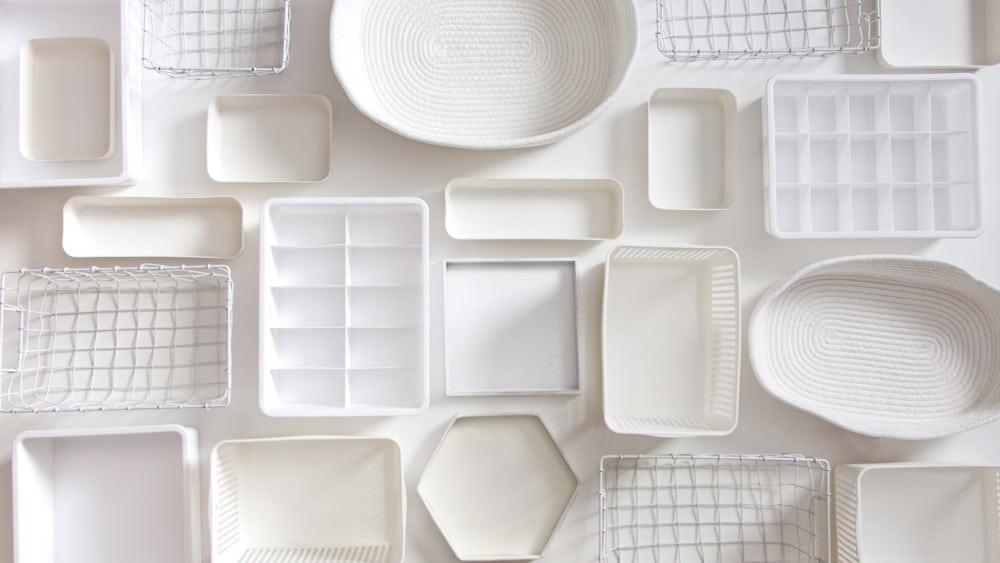
When coming up with a storage solution, make sure you keep the item near where you’ll use it and then ask yourself what the easiest way of storing it is. Limit keeping backup stock where possible. Resist the urge to keep things in bags unnecessarily, especially bags that are so small you have to squish the item in. Try not to overstuff any area, in fact. Less is more! Try not to stack different items. If putting something away requires more than one or two steps, it likely won’t happen consistently.
Test systems gently and adjust them without judgment. A system that evolves with you is far more effective than one that looks perfect on paper.
Often, those storage solutions you see advertised require more work using them than if you didn’t have them.
Example: You want to decant all your food into nicely labelled jars. You buy the jars and label them, but you can never find the time to refill them. You need to put a shopping order through, but it takes too much time to check both your jars and your backstock, so you end up just buying it again. You now have an empty ‘oats’ jar in one cupboard, a bag of oats, and another bag has just arrived in your shopping. All this stuff takes up a lot of space, and you feel like a failure for not being able to keep on top of it.
Solution: Keep a limited number of items in jars, where necessary, to stop them getting damp or to protect them from bugs like weevils. When you use a jar, keep backstock right behind it, rather than in a different cupboard. Choose to keep the majority of your food in its original packaging, loosely grouped in an uncrowded cupboard. up.

7. Getting overwhelmed
“There’s too much – I don’t know where to begin!”
How it shows up at home
Overwhelm can shut everything down. When clutter reaches a certain point, even thinking about tidying can feel exhausting. This often leads to avoidance, which allows the problem to grow.
Similarly, you might start and quickly get carried away, creating more mess than you began with.
How to work with it
When overwhelm sets in, the goal is not to organise—it’s to reduce the load on your nervous system.
Start with grounding actions:
- Clear one small surface/shelf/pile/box at a time
- Put rubbish straight into a bag
- Consider creating a box of things that need to be rehomed, so that you don’t get distracted
Lower your expectations. You are not trying to fix everything, you’re just trying to make things slightly easier.
Example: You start clearing out your wardrobe. You pull it all out in one go, and while going through, you’re making a lot of mess. You see things that belong in other rooms, so you wander off to put them away. While you’re there, you realise that space needs organising/clearing out too, so you begin. Soon, you have a messy bedroom and multiple other messy spaces.
Solution: Next time, tell yourself you’re only going to clear out one row of hanging items in your wardrobe. Get a box ready for things that need rehoming and a bag for charity/rubbish. You do not allow yourself to look at or tidy any other space until you’ve finished this one.
A kinder way forward
An organised home is not about perfection. It’s about understanding how your brain works and shaping your environment to support it. When systems align with your natural rhythms and needs, tidiness becomes less of a battle.
With ADHD, support matters. Body doubling, professional help, or simply having someone present can make a significant difference. Somebody being there to pull you out of a hyperfocus or to gently remind you that it’s ok not to organise all your son’s Lego by colour, and that it’s also ok to give a dress to charity rather than try to sell it, if it means an emptier, calmer home and workload. You might find yourself able to take some of the above advice on board on your own, but still struggle to implement other parts. That’s ok. Do it little by little, accepting your limitations and support when needed, and you’ll get there.
Your home doesn’t need to look like anyone else’s. It needs to feel supportive, workable, and kind.
And that is more than enough.